
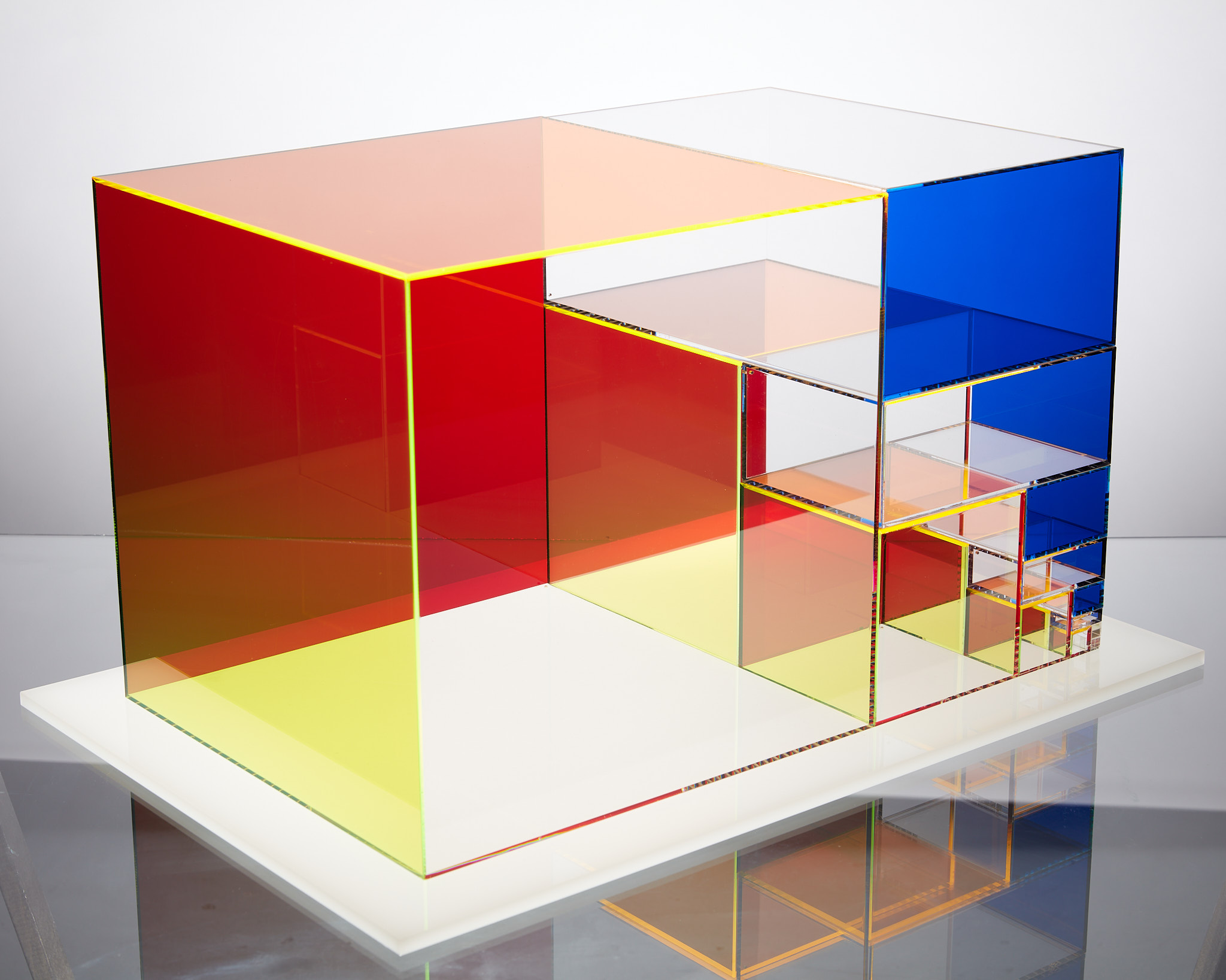
Details - Overview
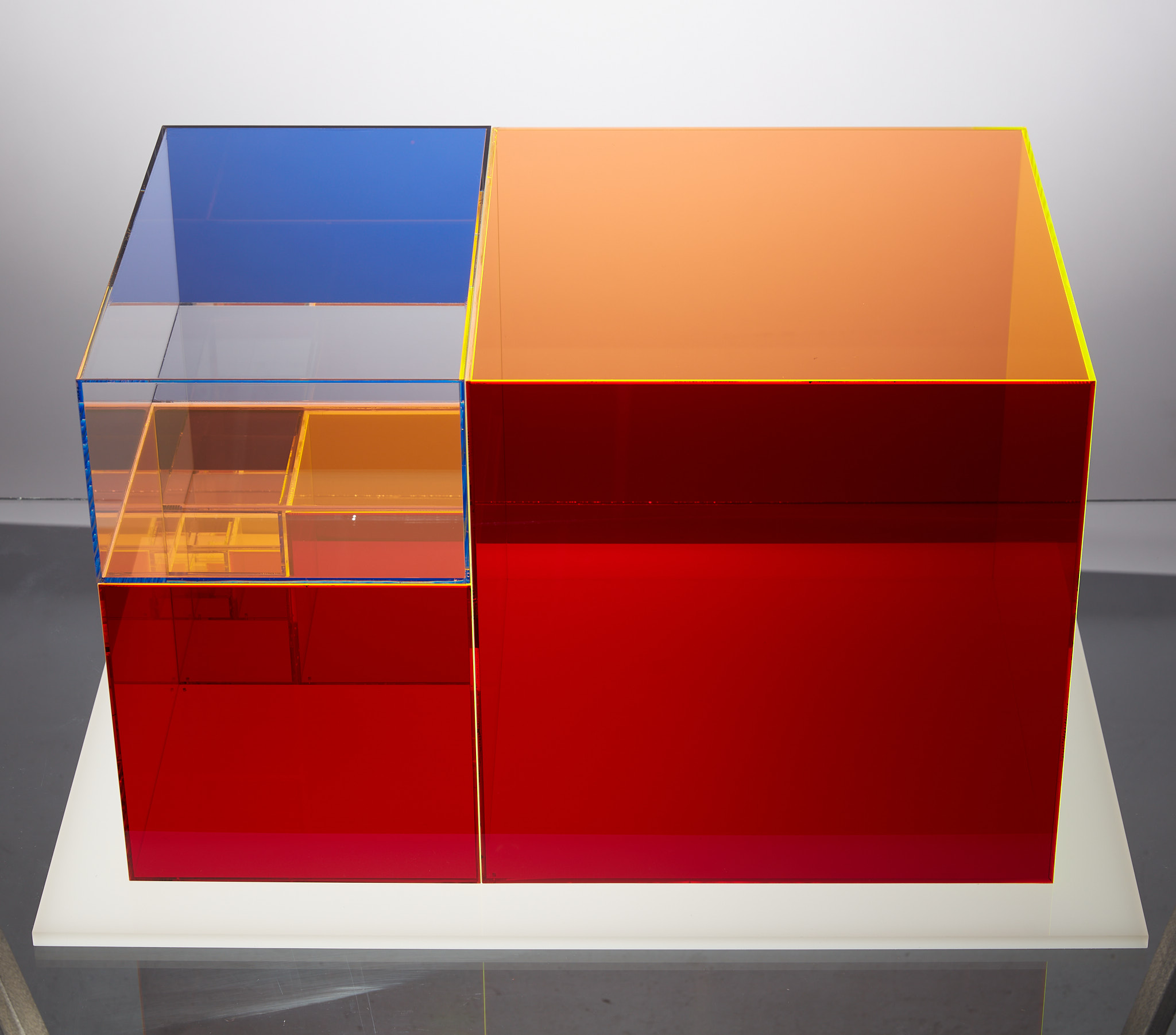
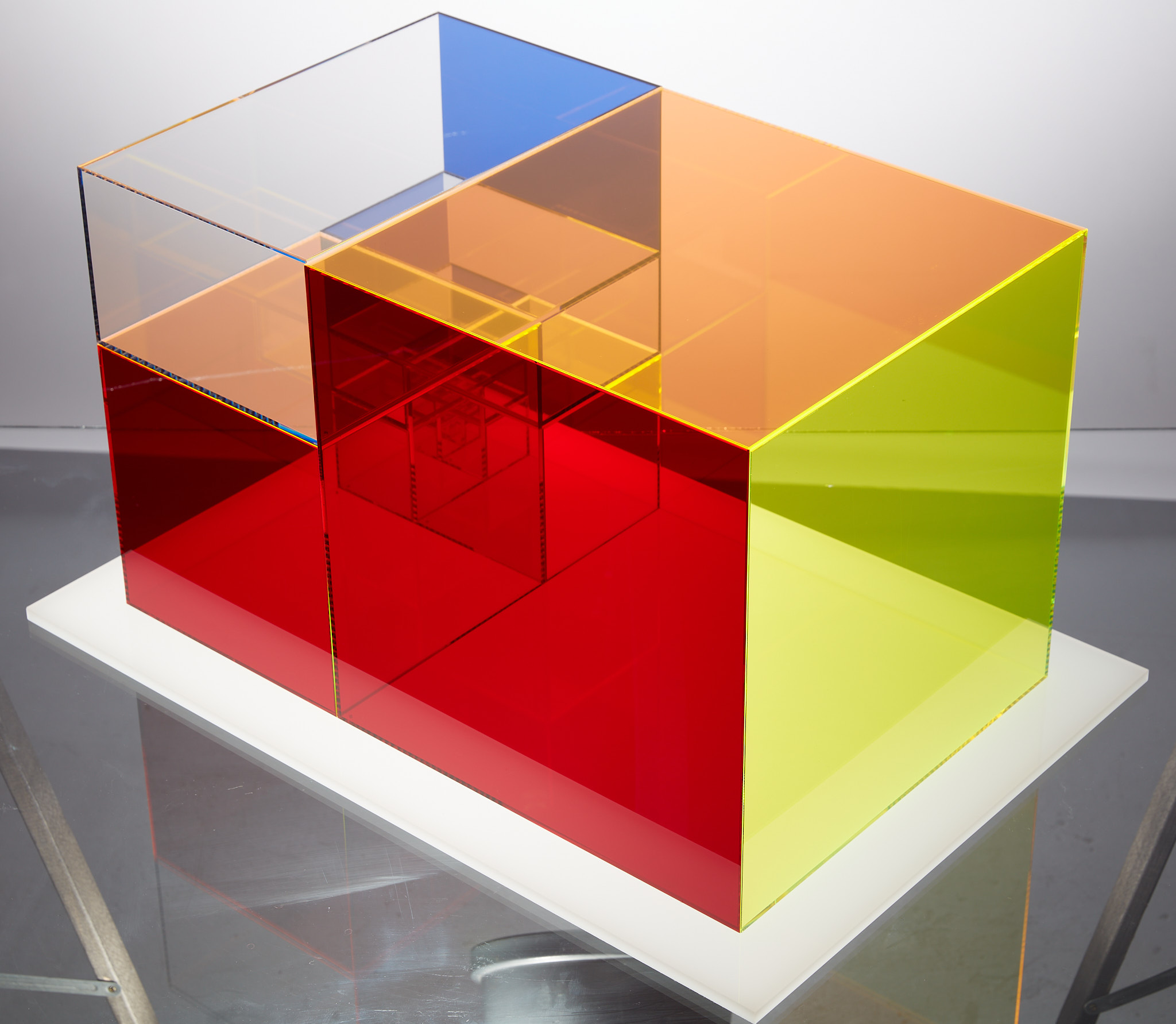
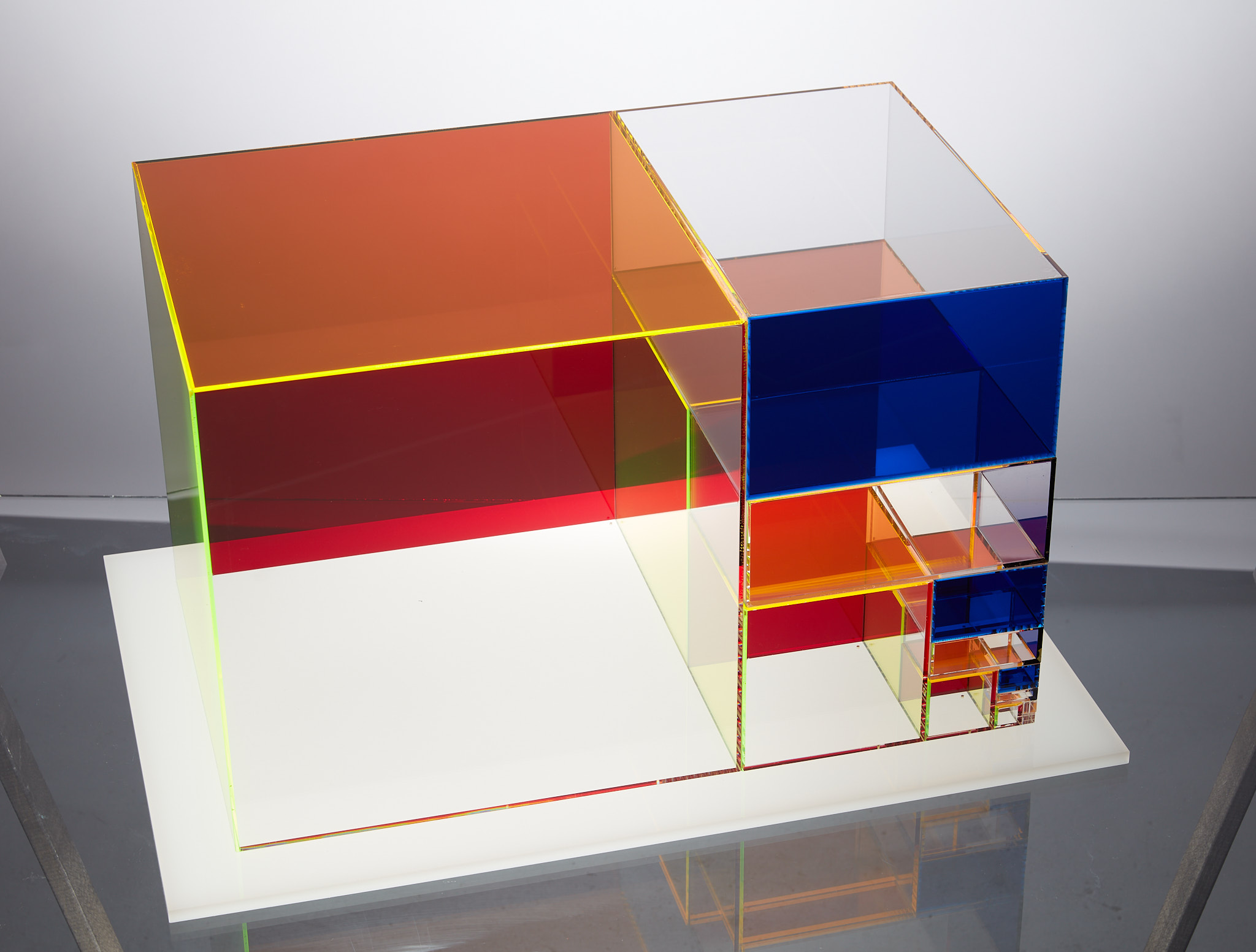
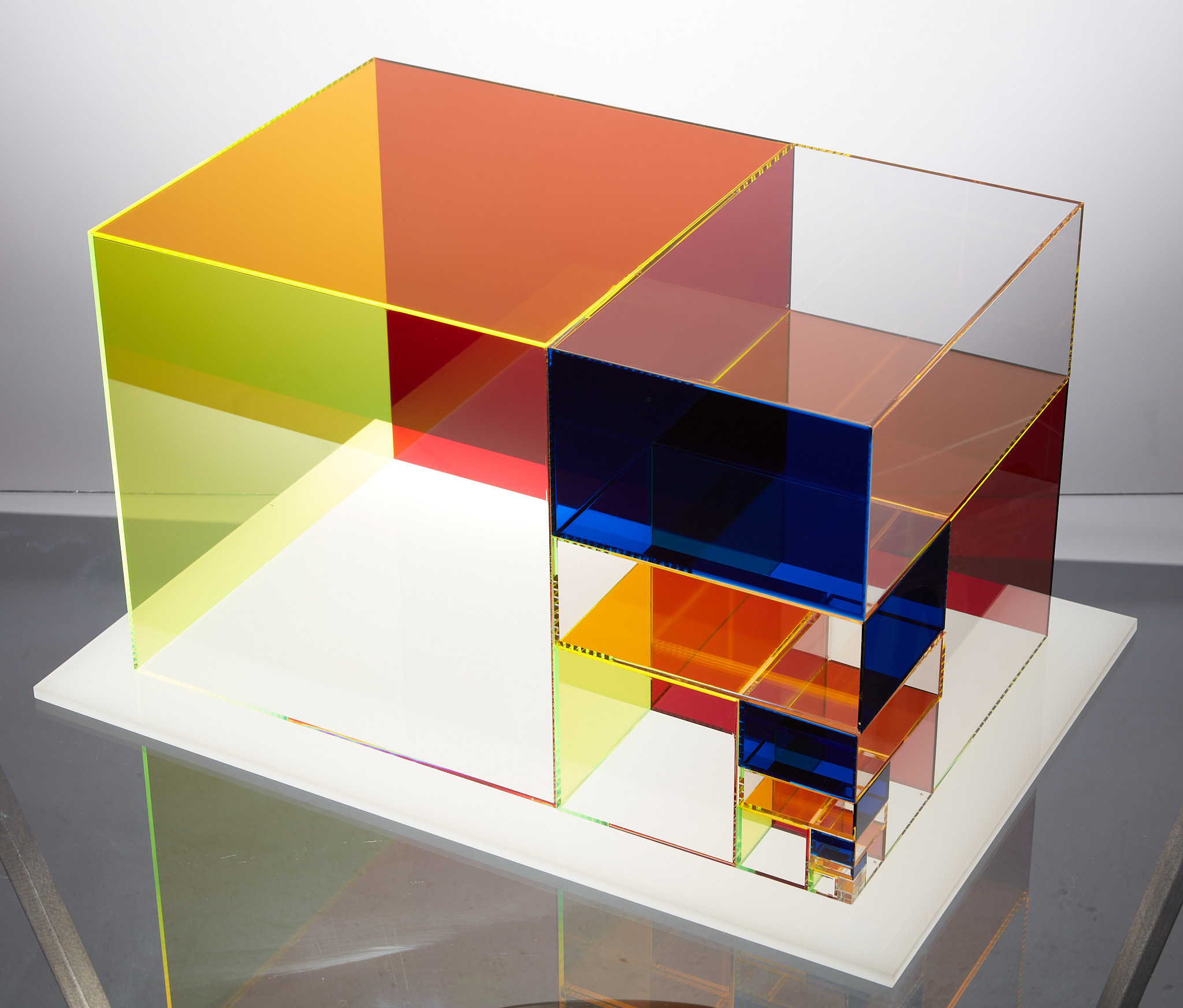
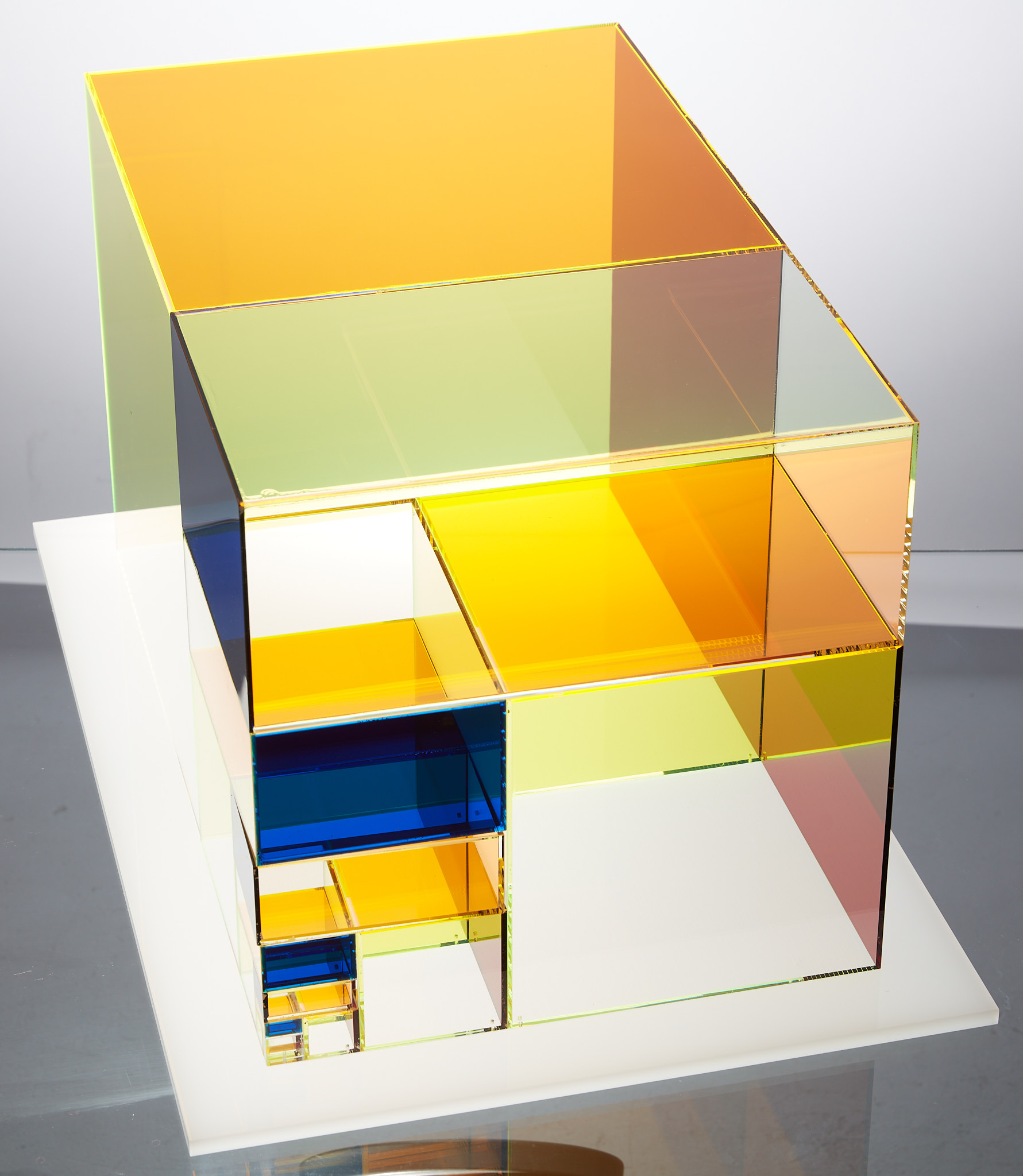
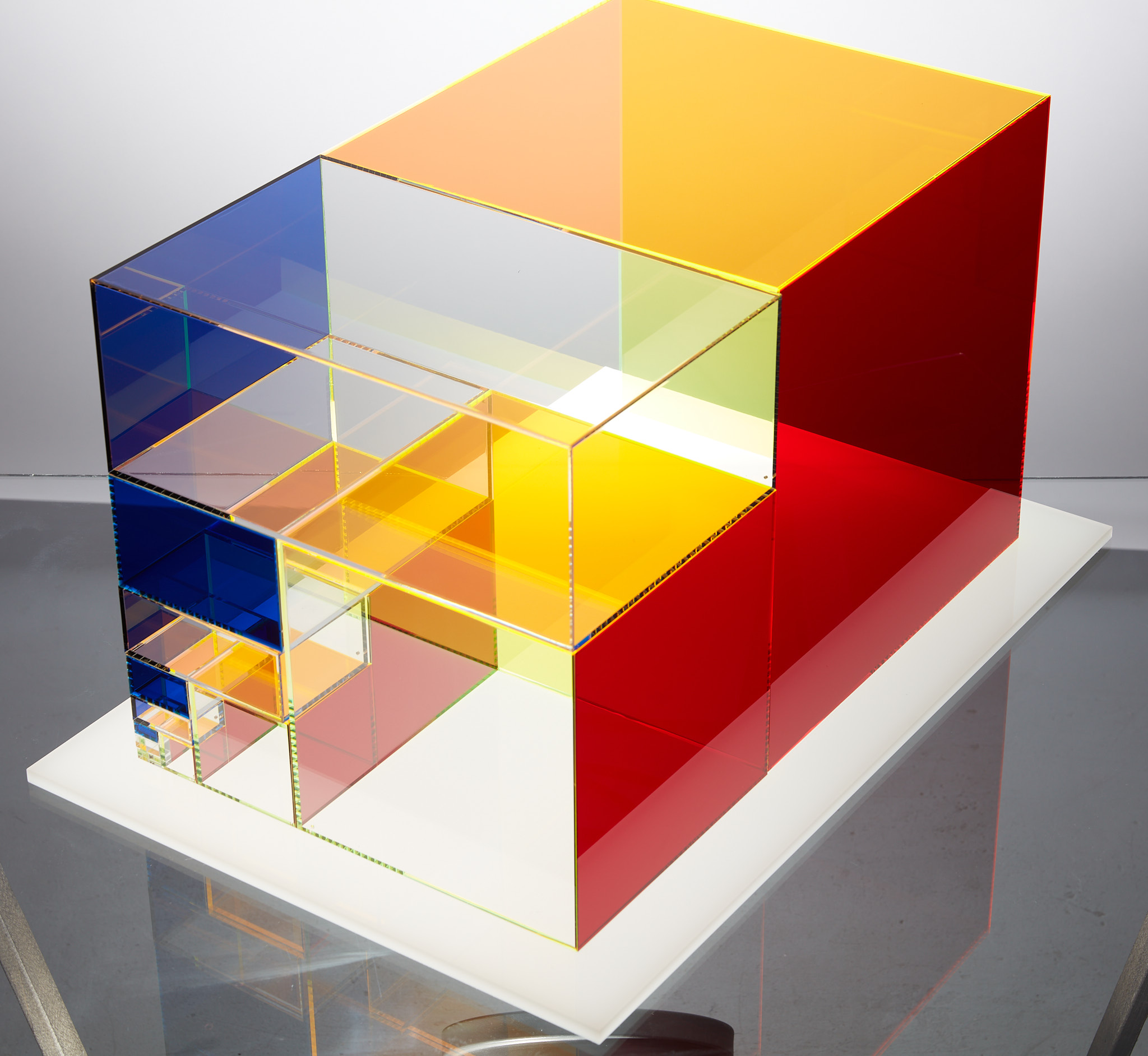
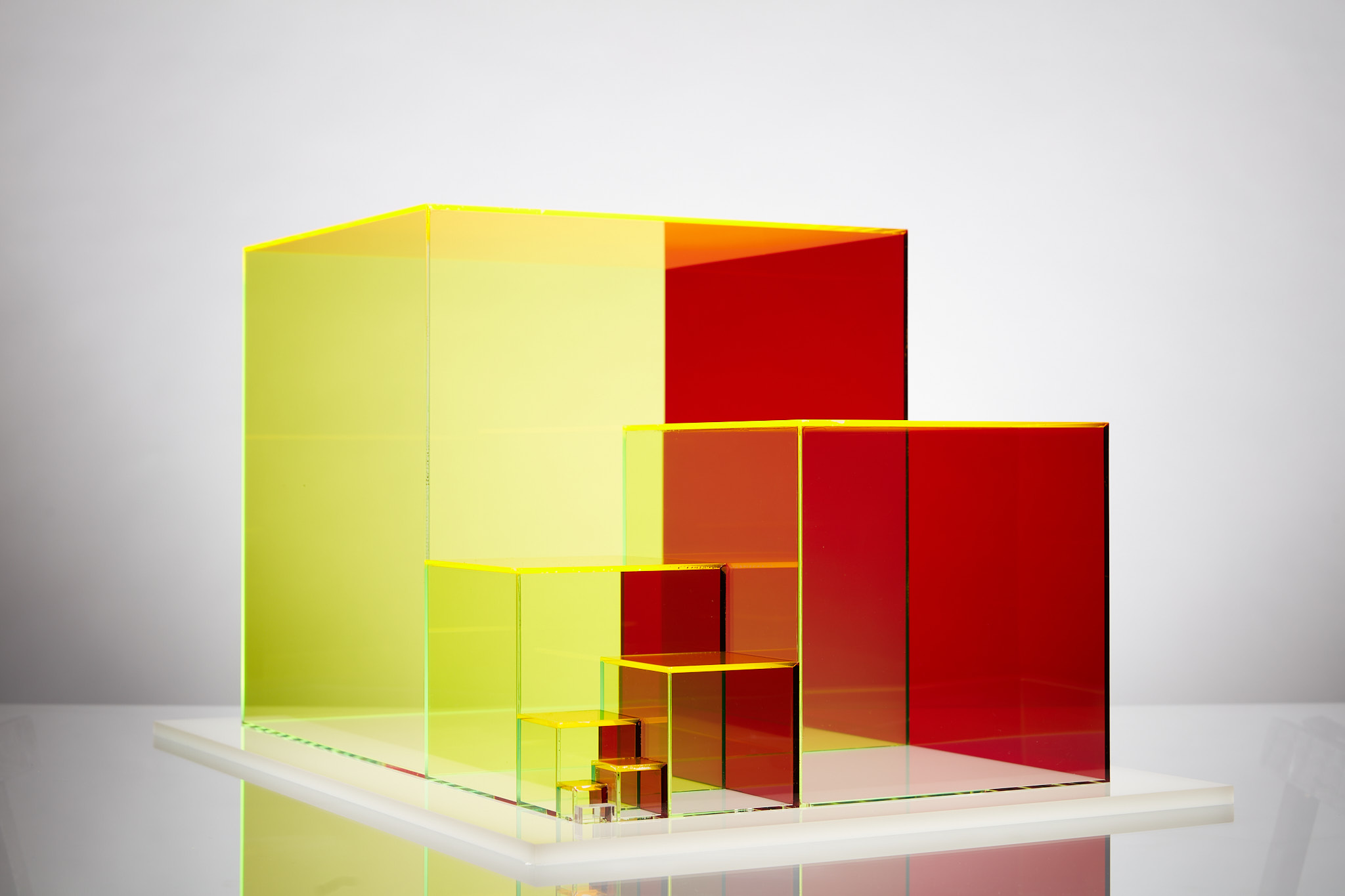
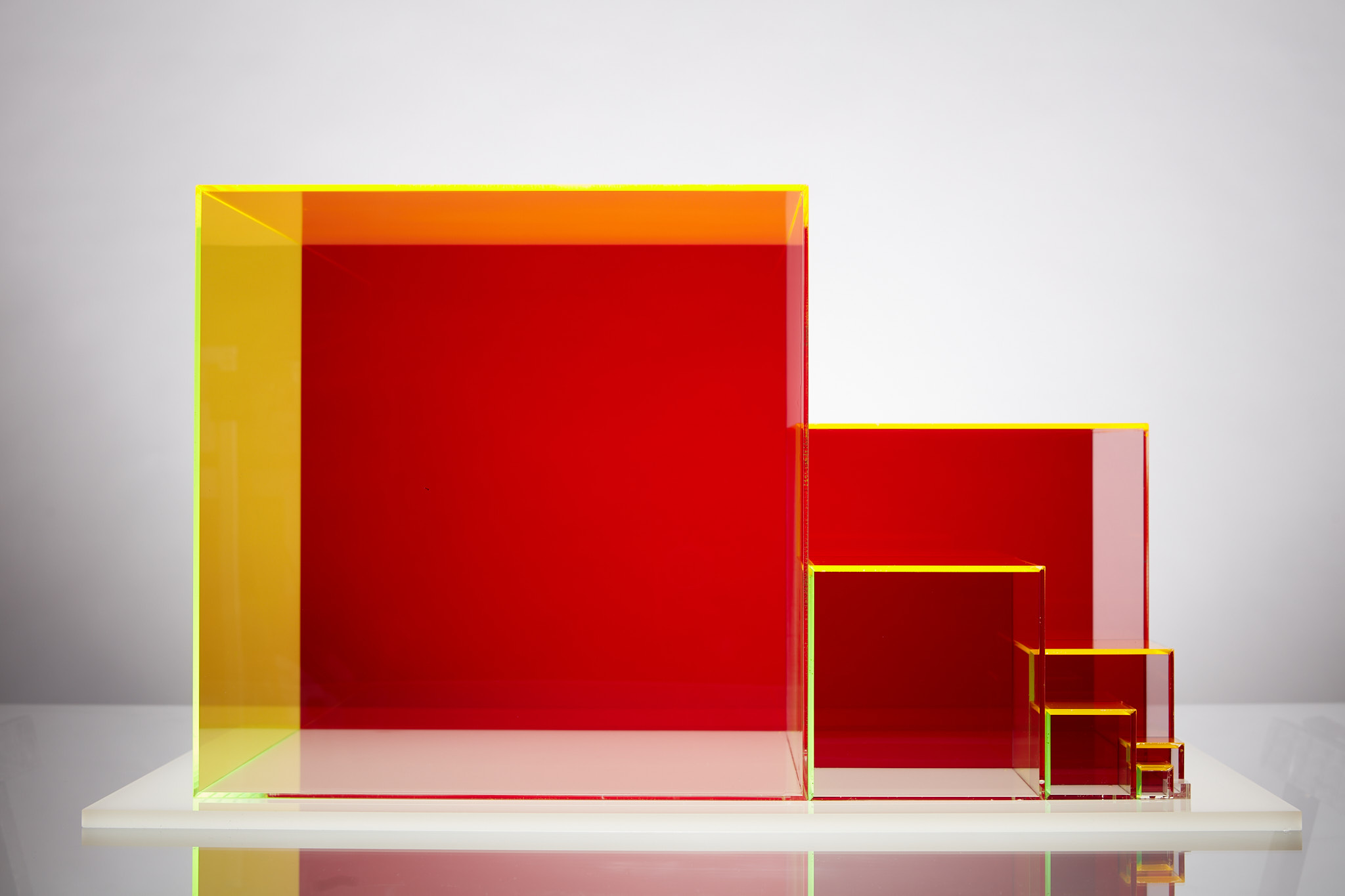
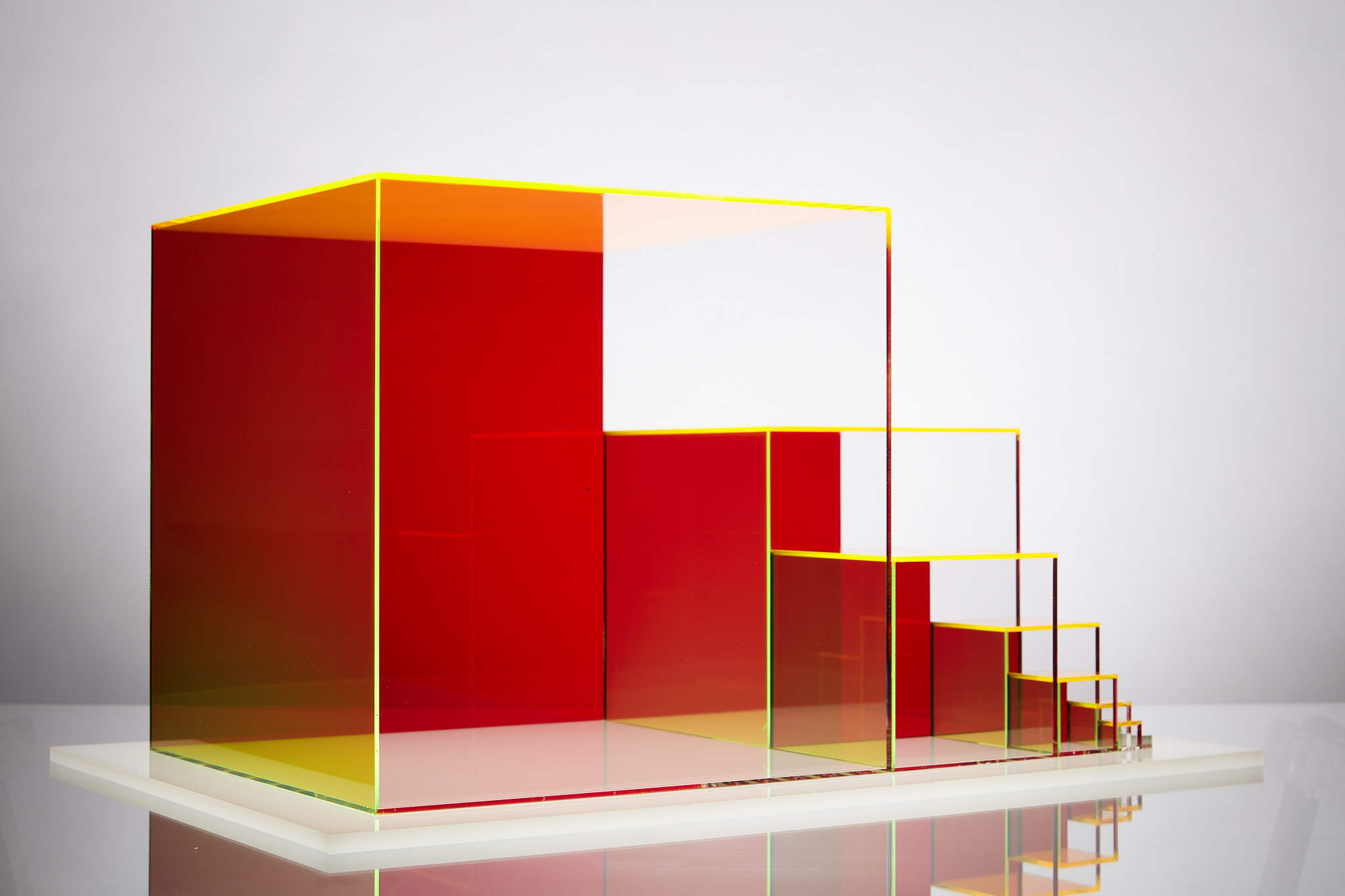
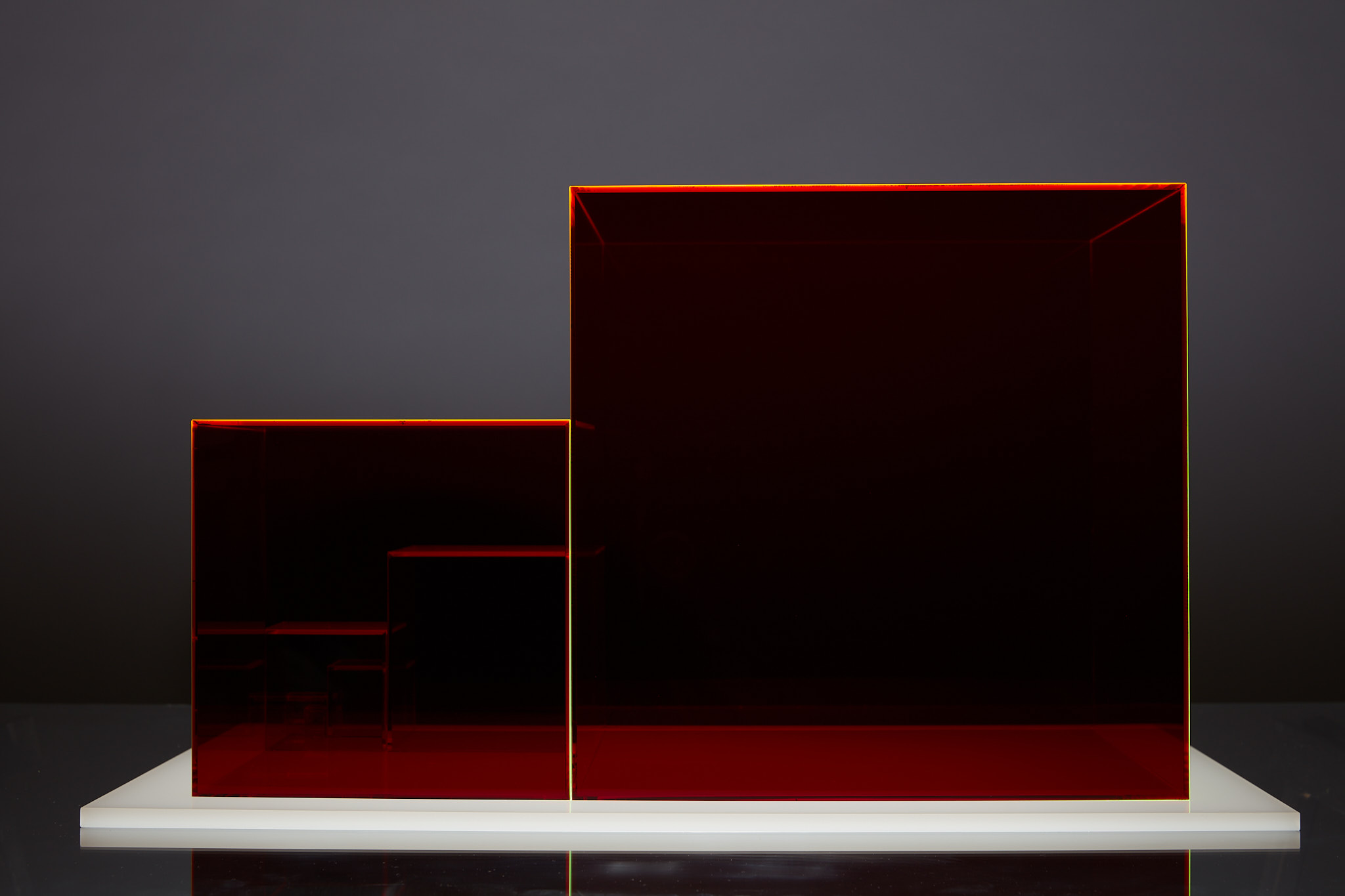
The photographs show the sculpture from various angles.
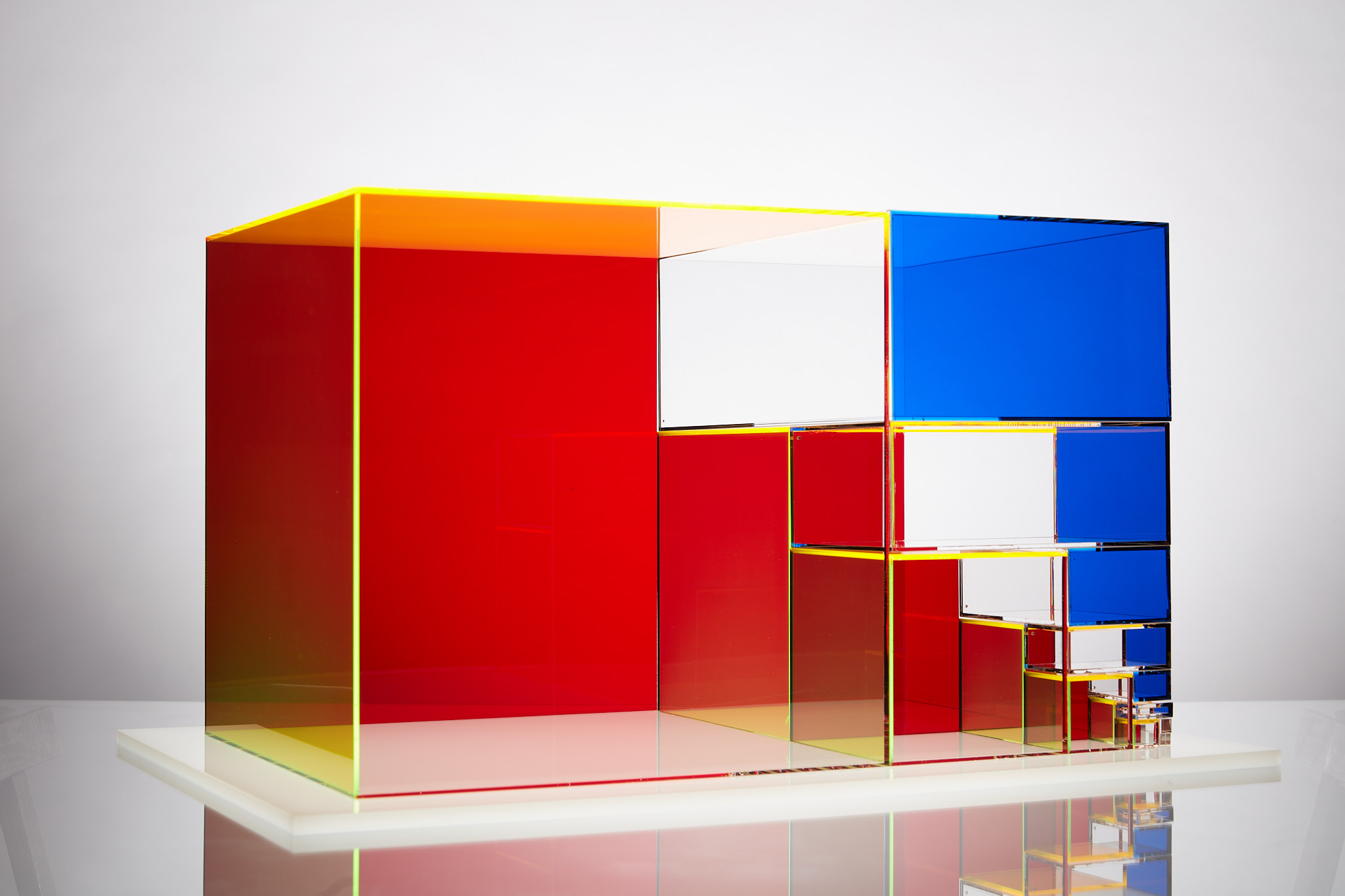
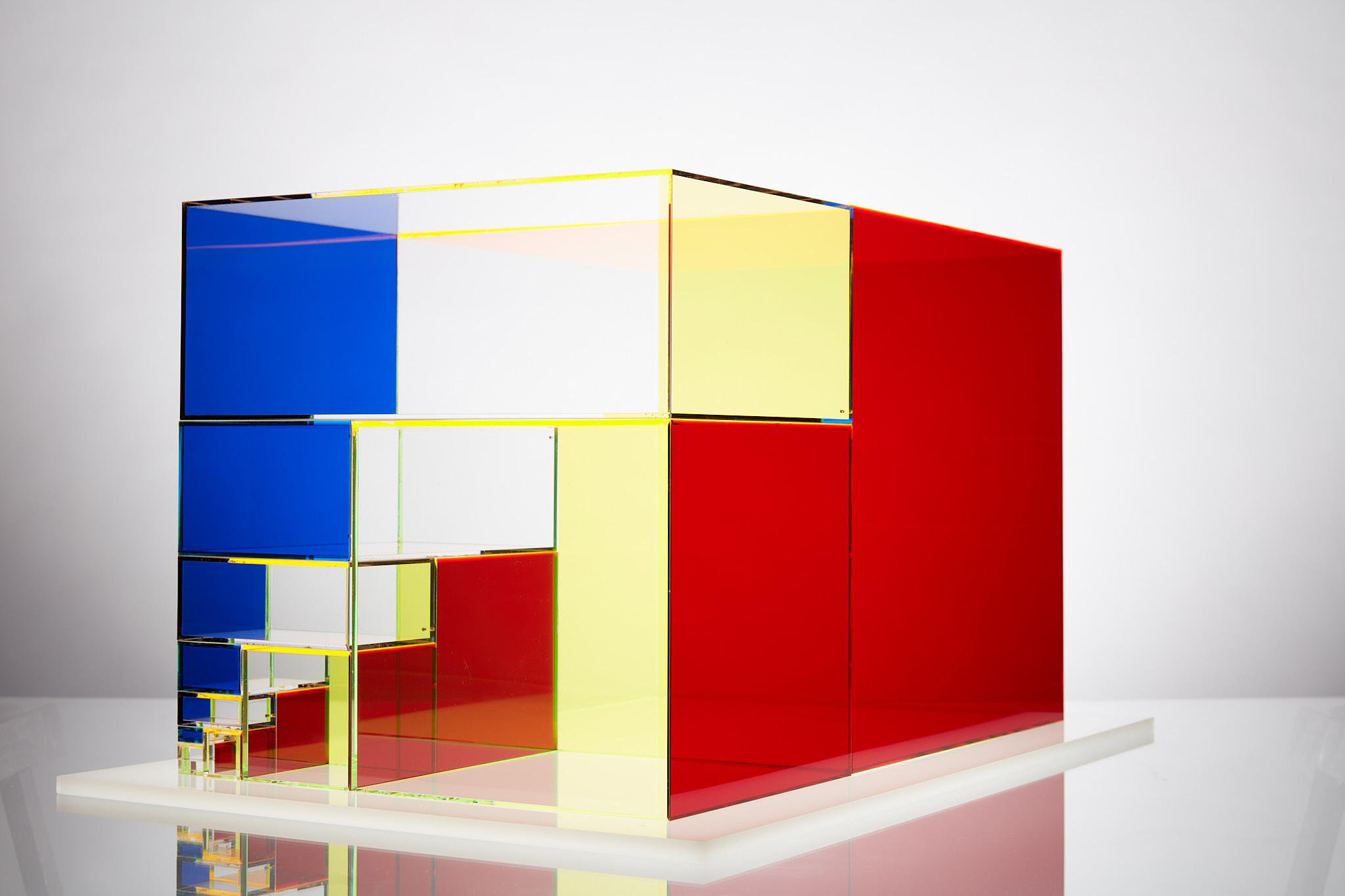
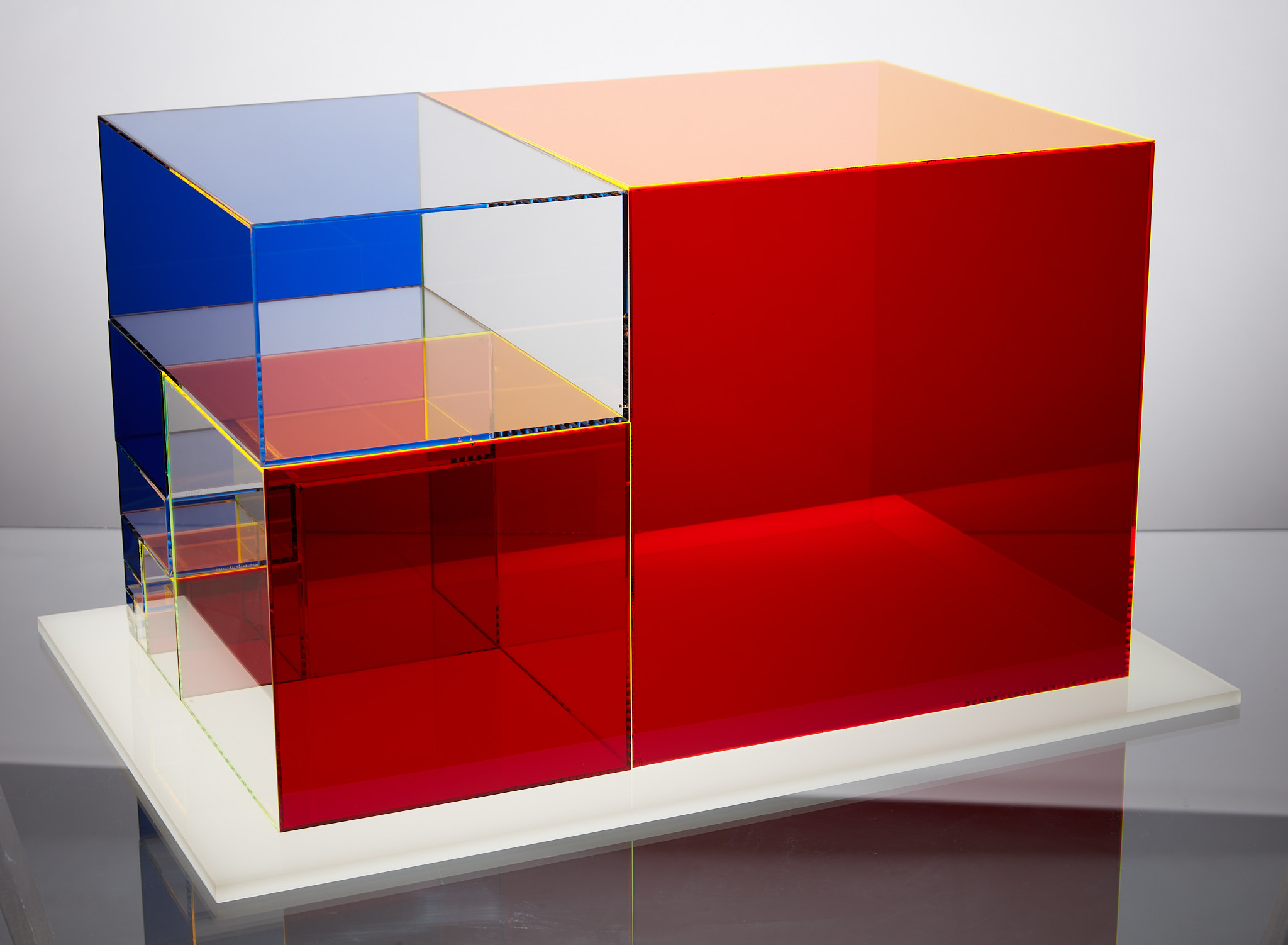
All photographs: © Copyright 2026 Gauthier Cerf. All rights reserved.
Fibonacci Cubes
The Fibonacci Cubes collection features arrangements of Fibonacci cubes and cuboids.
A Fibonacci cube is a cube whose side length corresponds to a Fibonacci number (e.g. 13 x 13 x 13 cm), starting with the 1 x 1 x 1 cm cube. A Fibonacci cuboid is a cuboid whose side lengths (length, width, height) correspond to three consecutive Fibonacci numbers (e.g. 13 x 8 x 5 cm), starting with the 2 x 1 x 1 cm cuboid.
Fibonacci Cubed
The sculpture Fibonacci Cubed (in the sense of «to the power of three») highlights the duality of the Fibonacci cubes and cuboids.
As the side surfaces of the cubes and cuboids consist of different semi-transparent coloured Plexiglas panels, this creates fascinating optical effects involving reflections, see-through effects and colour combinations. The light-conducting properties of Plexiglas produce brightly glowing edge effects, particularly on the fluorescent surfaces. These vivid edges mark the boundaries of the cubes and cuboids.
In detail: the sculpture consists of the first 10 Fibonacci cubes (1x1x1 cm to 55x55x55 cm) and the first 8 Fibonacci cuboids (2 x 1 x 1 cm to 55 x 34 x 21 cm). The sculpture stacks these elements on top of one another in such a way that they ultimately fill a cuboid measuring 89 x 55 x 55 cm seamlessly and completely.
Mathematically, this means that the sum of the cubes of the first N Fibonacci numbers, plus the sum of the products of the first N–2 Fibonacci triplets, is equal to the square of the Nth Fibonacci number multiplied by the (N+1)th Fibonacci number.
To reveal the inner workings of the sculpture, three of the six cube faces are transparent. The other three are coloured in the semi-transparent, fluorescent colours yellow, orange and red.
In the case of the cuboids, only one of the two short sides is coloured dark blue, whilst the others are transparent, allowing a view into the interior.
Assembly - cube staircase
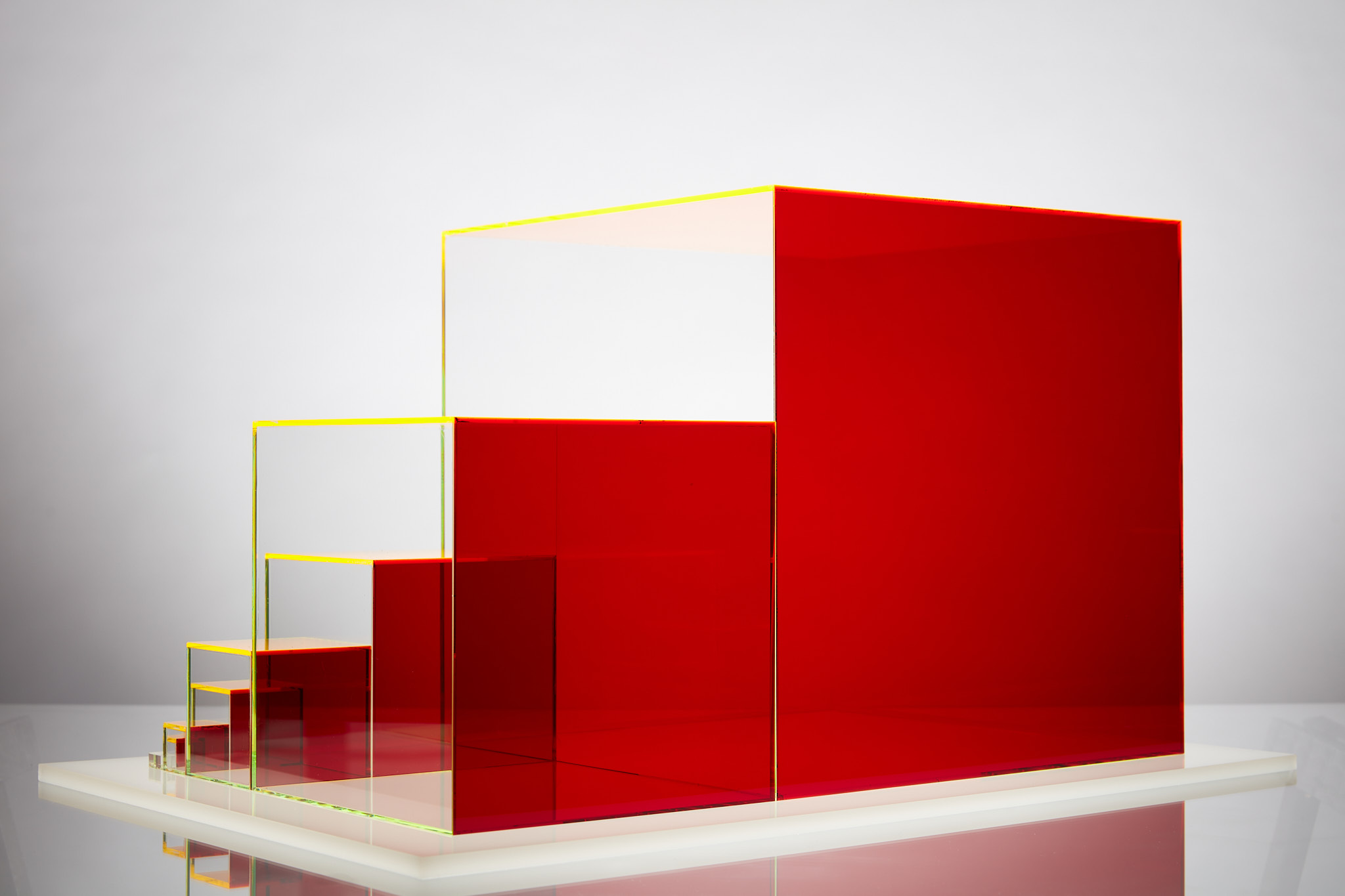
The cubes are arranged in order of size, starting with the 1x1x1 cube, alternating between the right and the back, until the last cube is in place. Due to the Fibonacci dimensions, their base area always forms a Fibonacci rectangle (a rectangle in which the width and length are two consecutive Fibonacci numbers).
The sketch below shows the structure of this cube staircase.
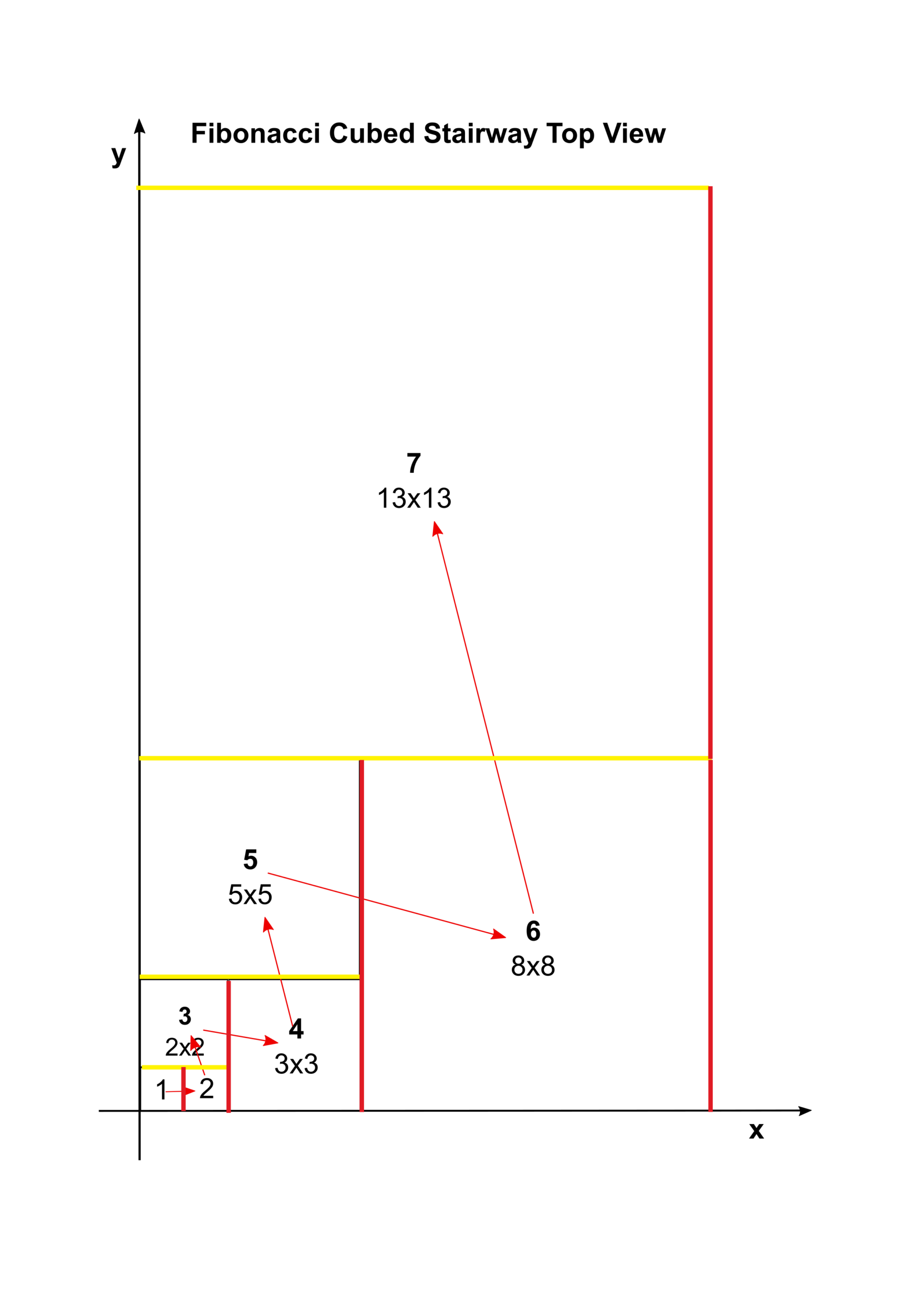
Illustration – cube staircase
The pictures show the structure of the Fibonacci cubes without the cuboids.
Assembly – cuboids
Finally, the Fibonacci cuboids can be placed on the cube staircase from the bottom up. It turns out that each cuboid fills each step of the staircase exactly so that it covers the step completely and lies flush against the next step up. To achieve this, the Fibonacci cuboids must be placed alternately in the direction of the x- and y-axes.
Once all the Fibonacci cuboids have been arranged in this way, a cuboid with Fibonacci dimensions of 89 x 55 x 55 cm is formed.
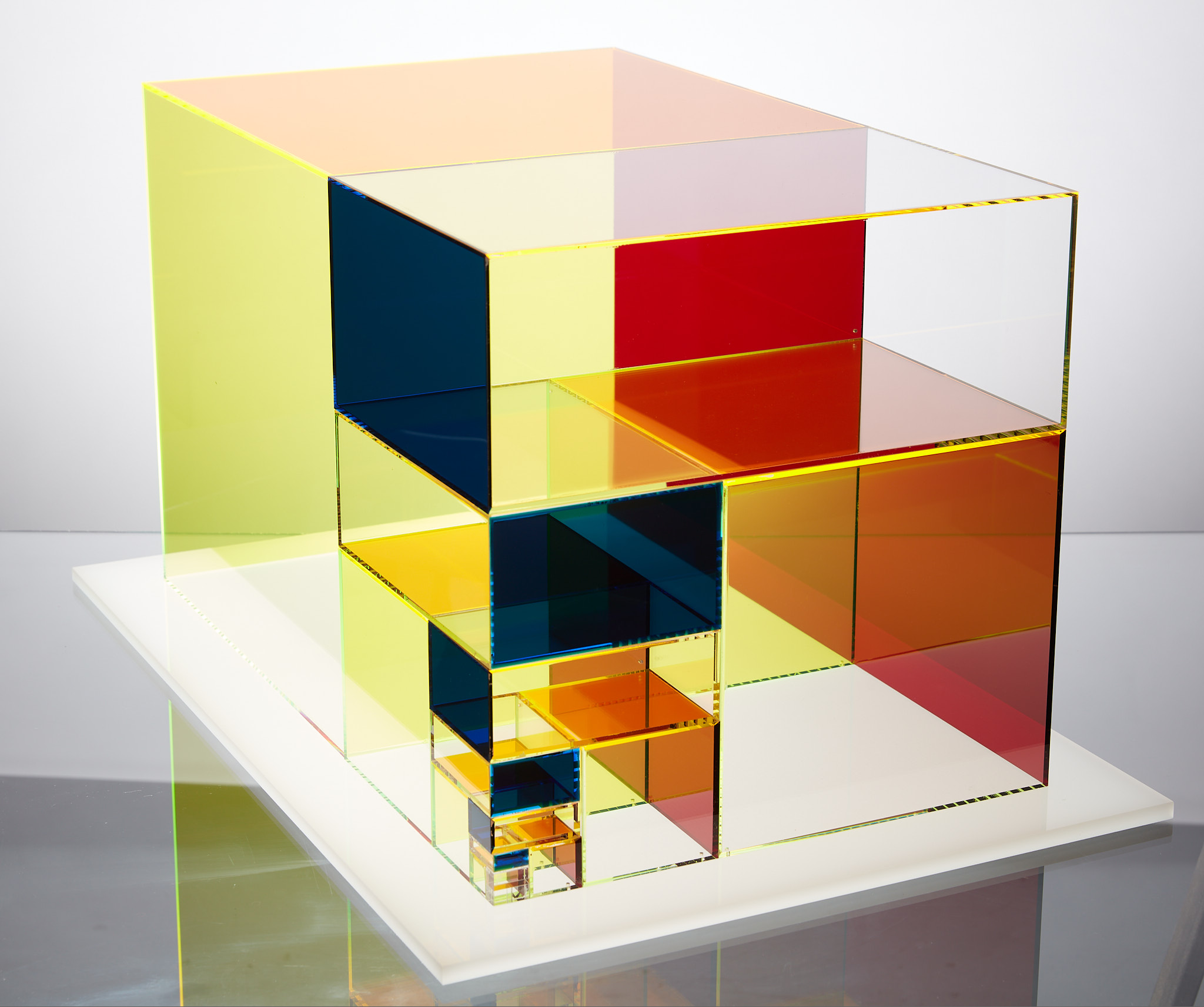
Photo: The sequence of Fibonacci cuboids used to fill the cube staircase with Fibonacci cubes.
Cubes in Nature
Alongside the sphere, the cube is one of the purest spatial forms in nature. Cubes occur, for example, in metals with a cubic crystal lattice and show wonderful natural sculptures with often intergrown cubes (see picture on the right: cube-shaped, intergrown pyrite crystals from the Ampliación a Victoria de Navajún mine, La Rioja, Spain).

Foto by JJ Harrison (https://www.jjharrison.com.au/) – Own work, provided under the CC BY-SA 3.0 Licence.